

Proven Results
Computer Vision Systems
Perception systems built for accuracy, scale, and real-world conditions.
We design and deploy computer vision systems that interpret images and video reliably — across environments, devices, and edge cases — moving beyond demos into production-grade visual intelligence.

Production computer vision systems in real-world environments

Camera-only, edge-ready & cloud-integrated architectures

Trusted across sports tech, health, mobility, and industrial platforms
/ THE REAL PROBLEM
THE CHALLENGE ISN’T DETECTING OBJECTS. IT’S MAINTAINING VISUAL CORRECTNESS UNDER REAL-WORLD VARIABILITY.
- Most computer vision systems fail not because models are weak —but because lighting changes, camera angles vary, motion introduces noise, and edge cases aren’t controlled.
- Real-world vision systems require data discipline, architectural boundaries, and validation layers, not just pretrained models.
THIS IS FOR YOU IF:
 Visual accuracy matters more than lab benchmarksYou need CV systems that work outside controlled environmentsYou’re moving from experimentation to deploymentYour product depends on consistent visual interpretation
THIS IS NOT FOR YOU IF:
 You only need a demo or proof-of- conceptYou expect perfect accuracy without trade-offsYou want generic models without domain adaptation
How we thought

Clarifying the Real Problem

Reduced failure modes by defining agent roles explicitly
Prevented unintended actions through enforced constraints
Designing for Human Behaviour
Increased trust through transparent agent decisions
Reduced intervention fatigue with clear escalation paths
Balancing Intelligence with Simplicity
Delivered coordinated reasoning without unnecessary complexity
Improved usability by exposing outcomes, not internal chatter
Engineering for Scale and Reliability
Enabled parallel task execution without cascading failures
Maintained consistency across growing workflows
Building for What Comes Next
Designed feedback loops for continuous improvement
Built architectures adaptable to future models and tools
Production AI Architecture
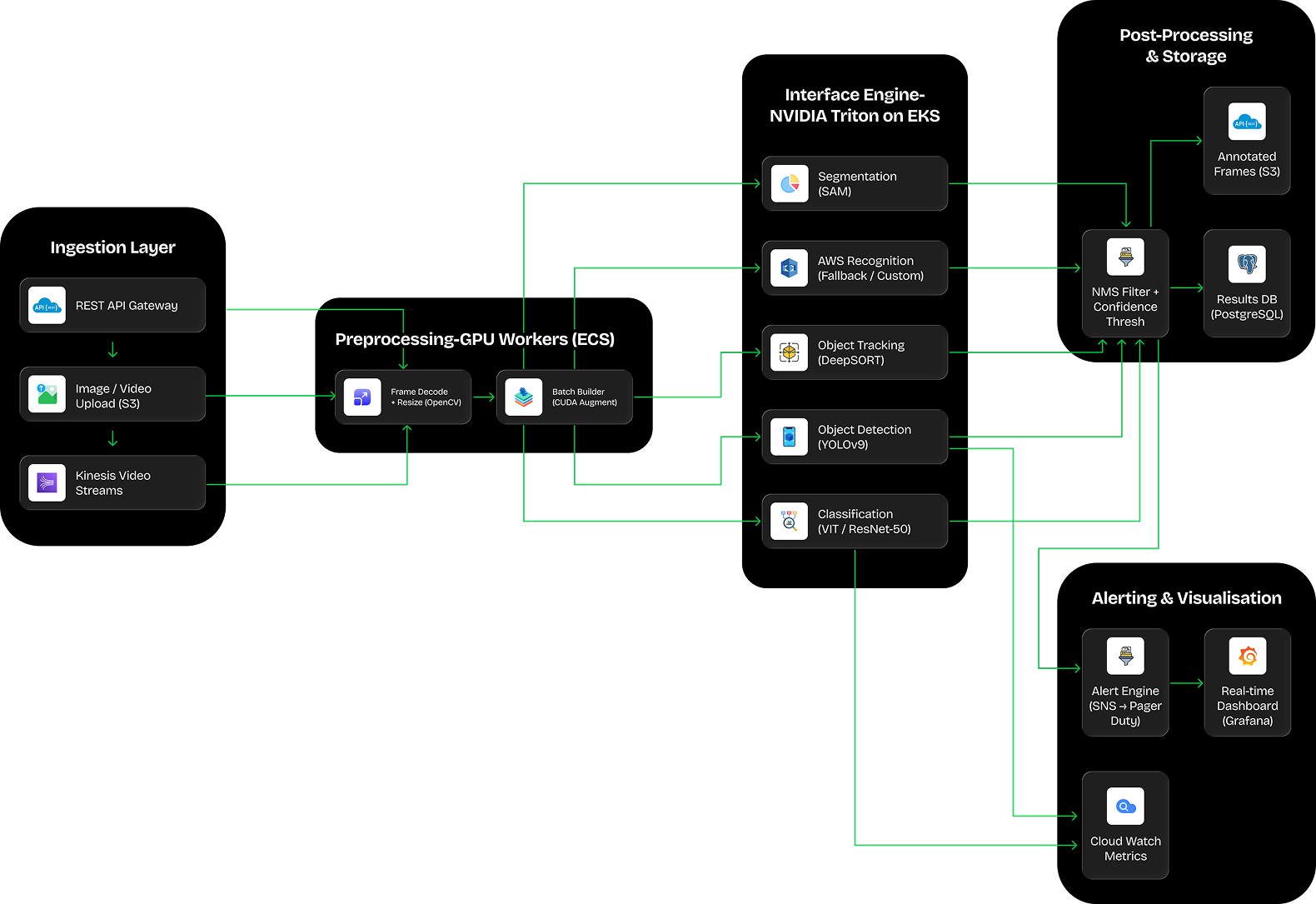
A Production AI architecture built for correctness, scale & change.
Selected Case Studies
What Changed

Reliable execution across workflows

Reduced operationaloversight

Production adoption of autonomous systems
What changed wasn’t just performance — it was confidence.


We are Microsoft Certified



Speak Directly With the
People Who Build




Company
About Us
Our Work
Insights
Resources
Careers
Contact Us
How We Work
Media Gallery
+1.svg) D 908 - PNTC, Times Of India Press Rd, Prahlad Nagar, Ahmedabad, Gujarat - 380015, India
D 908 - PNTC, Times Of India Press Rd, Prahlad Nagar, Ahmedabad, Gujarat - 380015, India Langenthalstrasse 8A, 4912 Lotzwil, Switzerland.
 1204 Al Manara Tower, Business Bay Dubai, United Arab Emirates
© 2026 CIZO. All rights reserved.
Privacy Policy
 Built with enterprise standards for security, data handling, and delivery.Partnered with & recognized by global technology platforms.